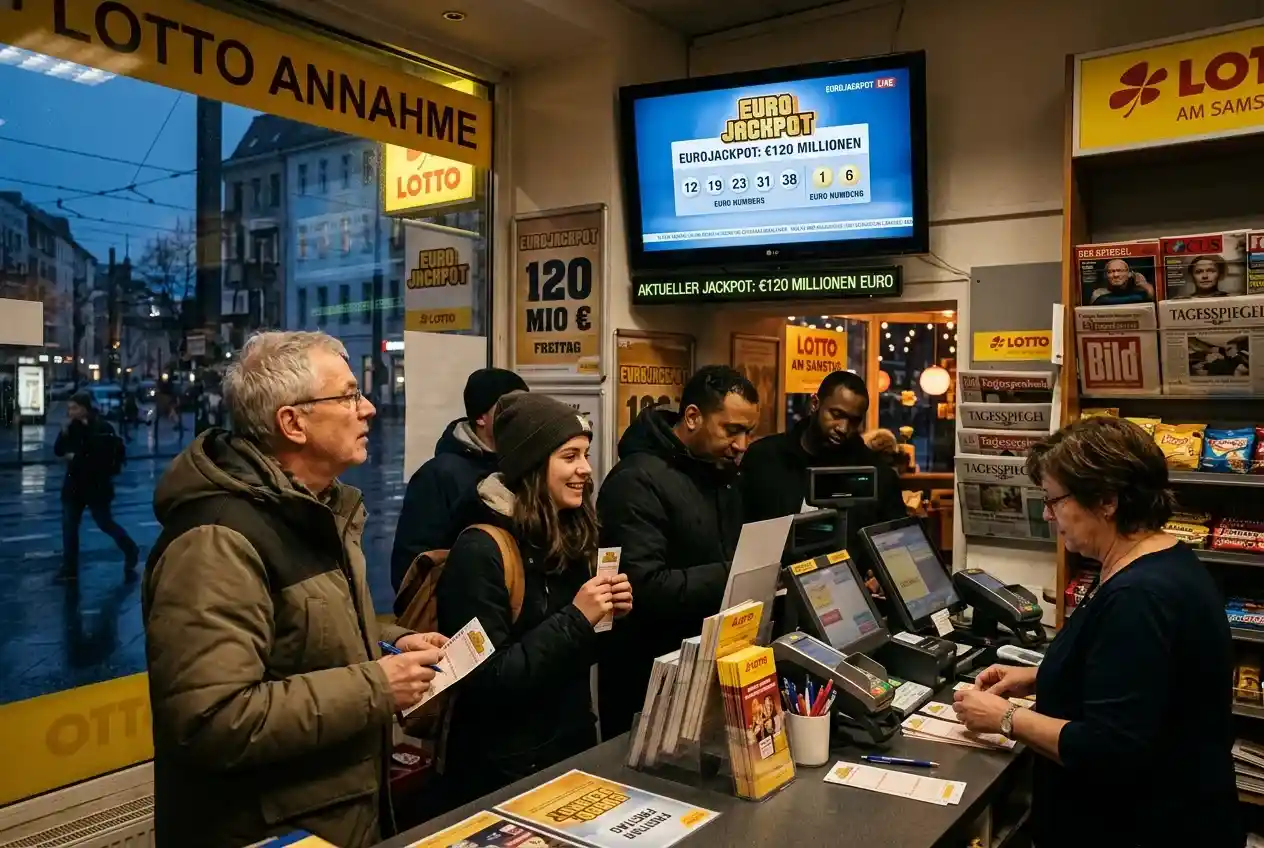
A lottery jackpot does not need to change everyday life to capture public attention. Sometimes it is enough for the number to become almost impossible to ignore. When Eurojackpot reaches 120 million euros, Germany starts watching more closely than usual: not only regular lottery players, but also people who rarely buy a ticket, families talking at the kitchen table, office colleagues sharing quick jokes, and local newsrooms waiting for the next draw.
The attraction is easy to understand. A prize of 120 million euros is not just a large sum. It is the official ceiling of the Eurojackpot, the point where the game reaches its maximum possible headline figure. The amount is big enough to feel distant from ordinary life, yet close enough for people to imagine what they would do if the right numbers appeared on their ticket. That tension between fantasy and realism is what makes the Eurojackpot so powerful in Germany.
Why 120 million euros matters
The 120 million euro mark is special because it is not just another rollover. Eurojackpot starts with a high minimum jackpot and grows when no player matches all required numbers. Once it reaches the maximum, it cannot climb higher in the first prize category. That creates a very specific kind of public mood. The jackpot no longer feels like it is building toward something; it has already reached the top.
For German players, this number carries extra weight. Germany is one of the most important Eurojackpot markets, with strong lottery traditions, a wide retail network, and high public awareness of major draws. Lottery tickets are still sold in familiar local shops, but online play has also become normal for many adults. This mix of old habits and digital access means a record-level jackpot can spread quickly through everyday conversation.
The size of the prize also changes the way people think about money. A few million euros already means financial security for most households. One hundred and twenty million euros belongs to another category. It suggests not only a new house or early retirement, but a complete change of social position, investment possibilities, privacy concerns, family decisions, and long-term responsibility. The fantasy becomes more complicated because the amount is almost too large to handle casually.
Germany follows such jackpots with a combination of excitement and restraint. The tone is rarely only euphoric. Public discussion often includes questions about odds, taxes, anonymity, responsible gambling, and what happens after a major win. That is one reason the Eurojackpot is interesting as a social event. It is not only about chance. It is also about how a country with a careful attitude toward money reacts when chance suddenly offers a sum that breaks normal financial imagination.
How the Eurojackpot works
Eurojackpot is a European lottery played across multiple countries. Players choose five main numbers and two Euro numbers. To win the jackpot, all seven numbers must match the drawn result. Draws are held twice a week, on Tuesday and Friday, which gives the game a steady rhythm. When there is no jackpot winner, the prize rolls over until it is won or reaches the maximum level.
The draw itself takes place in Helsinki, while national lottery organizations manage participation in their own countries. In Germany, the state lottery system plays a central role. That matters because German lottery culture is built around regulation, public trust, and the idea that lottery revenue supports public-interest purposes. The game is not presented as an uncontrolled private betting product, but as part of a regulated lottery environment.
The odds are the part many players understand only vaguely. The chance of winning the jackpot is extremely small, around 1 in 140 million. This does not stop people from playing, but it shapes the sensible way to look at the game. A Eurojackpot ticket is not an investment plan. It is a low-cost chance to take part in a shared moment of possibility. The problem starts when people treat the jackpot as something they can chase through higher spending.
The basic structure is simple enough for casual players, but the prize system has several layers. Smaller wins are possible even without matching all numbers. When the jackpot reaches its cap, extra money can flow into lower prize categories, which is why large second-tier wins often become part of the story when the top prize is not won immediately.
A clear view of the game helps explain why Germany follows the 120 million euro jackpot with such interest:
| Feature | What it means for players in Germany |
|---|---|
| Maximum jackpot | The top prize can reach 120 million euros, but not go above that level. |
| Draw days | Draws take place every Tuesday and Friday. |
| Winning combination | Players need five correct main numbers and two correct Euro numbers for the jackpot. |
| Jackpot odds | The chance of winning the top prize is about 1 in 140 million. |
| German participation | Tickets are available through regulated state lottery channels and authorized online platforms. |
| Public attention | Interest rises sharply when the jackpot reaches the cap because the prize cannot grow further. |
This structure explains why a capped jackpot can feel even more dramatic than a rising one. Once the prize reaches 120 million euros, players know they are looking at the largest possible Eurojackpot headline. The question is no longer how high the number can climb, but who, if anyone, will finally match the full combination.
Germany’s lottery culture and public attention
Germany has a long-standing relationship with lotteries. Many people see them as a normal part of life rather than a special event. A ticket at the kiosk, a quick online entry, a family syndicate, or a small office pool can all be part of the same culture. The Eurojackpot fits naturally into this environment because it combines European scale with local access.
When the jackpot reaches 120 million euros, the tone changes. Local media begin to report not only the numbers, but also regional winners in lower prize classes. A second-tier millionaire in North Rhine-Westphalia, Saxony, Hesse, or another federal state becomes part of the national story. Even when the jackpot goes abroad, German players can still have major wins, and those stories keep public attention alive.
There is also a regional element. Germany is not one single lottery market in the cultural sense. Each federal state has its own lottery organization, and announcements about large winners often include the state where the ticket was submitted. That gives the story a local emotional hook. A win in Berlin feels different to Berliners than a win somewhere else. A ticket from Bavaria, Saxony, or Lower Saxony creates local curiosity. People wonder whether the winner is from a town they know, whether it was an individual or a group, whether the person has already checked the ticket.
The mystery around winners is part of the appeal. Germany usually treats lottery winners with more privacy than some other countries. There is no loud public stage where every major winner is expected to appear. Often the public learns only the region, the amount, and sometimes whether the ticket was bought online or in a retail shop. This restraint protects winners, but it also creates speculation. The less people know, the more they imagine.
That imagination is especially strong with 120 million euros. People do not simply ask what they would buy. They ask whether they would tell anyone, whether they would keep working, whether they would move, whether family relationships would change. A huge jackpot turns into a mirror for private hopes and fears. Germany watches the prize because the prize is also a story about security, freedom, risk, and the limits of luck.
What happens when the jackpot reaches the cap
The Eurojackpot cap is important because it changes the financial mechanics of the draw. When the jackpot has reached 120 million euros, the first prize category stays at that level until someone wins it. The money that would otherwise increase the jackpot can strengthen lower prize tiers, especially the second prize category. That is why capped jackpot periods often produce impressive wins even when nobody hits the full combination.
For players, this makes the draw feel broader. The main dream is still the 120 million euros, but the possibility of several million euros in the second prize category becomes more visible. Matching five main numbers and one Euro number is still very difficult, yet these wins are not minor. They can turn several players into millionaires in a single evening.
This is one reason German media follow not only the jackpot winner but also the distribution of large secondary prizes. When players in several German states win millions during a capped jackpot phase, the story becomes more national. Even if the top prize goes to another country, Germany may still have a major night.
A capped jackpot also creates urgency. Some casual players who usually ignore regular draws may decide to participate because they feel the game has reached its peak. The thought is simple: if the maximum is available, this is the moment to try. That feeling is emotional rather than mathematical. The odds do not become easy just because the prize is higher. But people are not only responding to odds. They are responding to the rare public visibility of the maximum prize.
Responsible gambling messages matter most at this point. A high jackpot can make people forget that every line remains a long shot. The healthy approach is to set a fixed small budget, avoid chasing losses, and treat the ticket as entertainment. The fantasy can be enjoyable, but it should not become financial pressure. In Germany, this message is especially important because lottery products are widely accessible and culturally familiar.
A 120 million euro jackpot is exciting because it is rare, not because it is predictable. That distinction protects the player. It allows people to enjoy the draw without confusing possibility with expectation.
How players and media follow the draw
The modern Eurojackpot moment is built across several channels. Some people still check results through television, newspapers, or their local lottery shop. Others use official websites, apps, push notifications, or online accounts. The result is a shared event that no longer depends on one single broadcast moment. People check numbers at different times, but the emotional rhythm is still collective.
On draw nights, the first wave is anticipation. Before the numbers appear, media reports often focus on the jackpot size, the closing time for ticket sales, and the unusual scale of the prize. Social media adds humour and personal fantasy. People post imaginary shopping lists, retirement jokes, and comments about suddenly becoming unavailable for work.
After the draw, attention shifts quickly. The winning numbers are published, then the first question appears: was the jackpot won? If not, the story continues to the next draw. If yes, the focus moves to the country, region, and prize details. In Germany, people want to know whether the winner is domestic. If the jackpot goes elsewhere in Europe, German coverage still looks at local secondary winners.
The way people follow the Eurojackpot says a lot about the balance between private and public life. Buying a ticket is personal, but the jackpot is public theatre. Everyone can talk about the same number, while almost nobody knows who is seriously playing. A person may joke about the jackpot at lunch and then quietly check their ticket alone at night.
Several habits have become common when the jackpot reaches its maximum:
• Players check results through official lottery websites or apps to avoid mistakes.
• Many people join small syndicates at work or within families, which makes the draw feel more social.
• Local media track regional winners because a large prize feels more real when it is connected to a nearby state or city.
• Casual players often buy a ticket only when the jackpot reaches a headline amount.
• Responsible players decide their spending limit before the draw and do not increase it after losing.
These habits show why the Eurojackpot is more than a simple numbers game. It becomes a social ritual around hope, caution, and shared curiosity. Germany’s reaction is not wild or careless; it is attentive, practical, and quietly emotional.
The real meaning of a record-level prize
The most interesting part of the 120 million euro Eurojackpot is not only the money. It is what the money represents. For many people, the prize becomes a symbol of escape from pressure: rent, mortgages, insecure work, family obligations, rising costs, or the feeling that financial freedom is always slightly out of reach. A lottery ticket compresses all of that into one small act.
At the same time, a prize this large raises serious questions. Sudden wealth can solve financial problems, but it can also create new ones. Privacy becomes valuable. Advice becomes necessary. Winners may need legal, tax, and financial planning before making major decisions. They may also need time to understand what has happened. The public sees the number; the winner has to live with the consequences.
Germany’s more private approach to lottery winners may be helpful here. A person who wins 120 million euros needs protection from attention, pressure, and rushed decisions. The best first move after a major win is not a luxury purchase. It is calm verification, secure storage of the ticket or account details, contact with the official lottery organization, and professional advice from trustworthy specialists.
For everyone else, the jackpot leaves a different kind of value. It creates conversation. It lets people imagine a life with fewer limits. It reminds them how strongly money is connected to time, choice, family, and peace of mind. Even those who never buy a ticket can understand why the country watches when the Eurojackpot reaches its maximum.
The draw eventually passes. The jackpot is won, reset, or rolled into the next wave of attention. But the 120 million euro moment stays memorable because it gathers many feelings into one number. Germany follows the prize not because people truly expect to win, but because the possibility is large enough to interrupt ordinary thinking for a while.
A record-level Eurojackpot is a public dream with strict rules, tiny odds, and real winners. That mixture is exactly why it continues to fascinate. It is entertainment, mathematics, regulation, hope, and caution in one event. When the top prize reaches 120 million euros, Germany does not simply watch a lottery draw. It watches one of the clearest examples of how chance can still command national attention