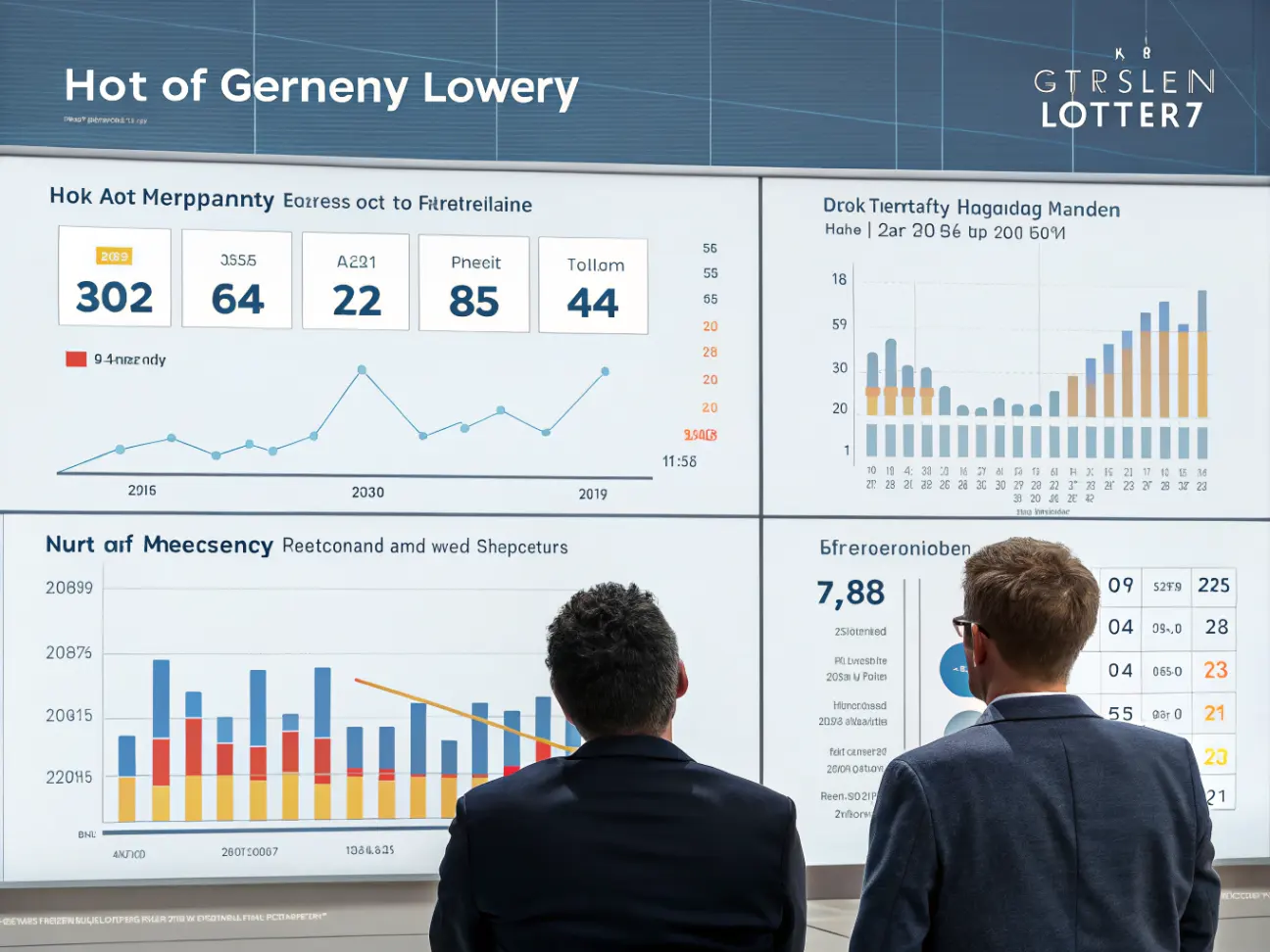
The German Lottery has long attracted players who look not only for luck but also for patterns hidden in the numbers. While lotteries are games of chance, statistics and historical results create a fascinating field of analysis. By examining hot numbers, cold numbers, frequency of draws, and long-term trends, players can better understand how results evolve over time. This article explores German Lottery statistics in depth, focusing on data-driven insights, probability principles, and analytical strategies that help interpret draw results more clearly.
Understanding German Lottery Statistics and Probability
Lottery statistics begin with probability theory. In Germany, the most popular format is Lotto 6aus49, where six numbers are drawn from 1 to 49, plus an additional Superzahl. The mathematical probability of hitting all six numbers is extremely low, but analyzing historical results reveals patterns in frequency distribution.
Each number theoretically has an equal chance of being drawn. However, in real-world datasets covering thousands of draws, some numbers appear more frequently than others. These variations are natural statistical fluctuations rather than proof of predictive power.
When analyzing German Lottery results, statisticians typically focus on:
- Total frequency of each number.
- Recency of appearance.
- Consecutive draw patterns.
- Odd versus even distribution.
- High versus low number balance.
Understanding these elements helps players move beyond random selection and toward structured number strategies, even though randomness ultimately governs every draw.
Hot and Cold Numbers in German Lotto 6aus49
The concept of hot numbers refers to numbers that have appeared more frequently in recent draws. Cold numbers are those that have not been drawn for a longer period. Many players believe hot numbers are more likely to continue appearing, while others think cold numbers are “due” for selection.
Before examining specific trends, it is helpful to understand how frequency data is typically presented. Below is a simplified example table illustrating number frequency trends over a selected period.
| Number | Total Appearances (Last 2 Years) | Last Drawn | Trend Status |
|---|---|---|---|
| 7 | 32 | 3 weeks ago | Hot |
| 13 | 29 | 1 week ago | Hot |
| 22 | 18 | 5 months ago | Cold |
| 31 | 27 | 2 weeks ago | Warm |
| 44 | 16 | 6 months ago | Cold |
This type of frequency table helps visualize statistical trends in a clear format. However, it is crucial to understand that each draw remains independent. The past does not directly influence the next result. Still, analyzing trends over hundreds of draws provides insight into how natural randomness behaves in practice.
Hot numbers often cluster during specific periods, while cold numbers may remain absent for extended stretches. Some statistical models suggest combining hot and cold numbers in balanced selections rather than relying exclusively on one category.
Frequency Distribution and Long-Term Patterns
Beyond hot and cold numbers, long-term frequency analysis gives deeper insights into number behavior. When reviewing thousands of German Lottery draws, certain structural patterns become evident.
The most common analytical observations include:
- Even and odd numbers tend to balance over long periods.
- High numbers (25–49) and low numbers (1–24) usually distribute evenly.
- Consecutive numbers appear more often than players expect.
- Specific number pairs reoccur statistically more frequently.
These patterns do not break probability laws but demonstrate how randomness distributes itself across large datasets. For example, while players often avoid selecting consecutive numbers such as 14 and 15, historical results show that consecutive combinations appear regularly.
Understanding frequency distribution helps eliminate psychological bias. Many players mistakenly believe that specific patterns are “unlikely,” even though statistical history shows they are perfectly normal.
Moreover, long-term trend analysis often highlights cyclical behavior, where certain numbers surge in activity over several months before stabilizing again. These cycles are not predictive tools but rather reflections of statistical variance.
Advanced Statistical Analysis and Predictive Models
Modern lottery analysis uses more sophisticated statistical tools. Data scientists apply regression models, probability simulations, and algorithmic trend tracking to German Lottery results. While no system can guarantee a win, structured data evaluation enhances understanding.
Common analytical approaches include:
- Moving average calculations to identify trend shifts.
- Probability weighting based on historical frequency.
- Monte Carlo simulations to test number combinations.
- Cluster analysis to detect recurring pairings.
- Gap analysis measuring how long numbers stay absent.
Gap analysis, for instance, measures the number of draws since a specific number last appeared. A long gap may psychologically encourage players to select that number, but mathematically, its probability remains unchanged.
Another widely discussed concept is random number generator simulation, where millions of virtual draws are conducted to compare historical results with theoretical probability. These simulations typically confirm that long-term German Lottery results closely align with mathematical expectations.
Advanced models are most useful for understanding variance and reducing emotional bias rather than predicting outcomes.
Player Behavior Trends and Statistical Biases
German Lottery statistics are not only about numbers but also about player behavior. Data shows that players tend to choose birthdays, anniversaries, and visually appealing sequences. This creates clustering in the lower number range between 1 and 31.
As a result, numbers above 31 are statistically under-selected by players, even though they have equal chances of being drawn. From a strategic standpoint, selecting higher numbers may reduce the risk of sharing a jackpot if you win.
Another common bias is avoiding repetition. Many players assume that if number 19 appeared last week, it is less likely to appear again. In reality, repeated numbers are statistically common across consecutive draws.
Trend data also reveals that quick-pick random selections perform similarly to manually selected combinations. This reinforces the principle that randomness dominates outcomes regardless of selection method.
Understanding psychological biases can be just as important as analyzing draw statistics. Rational players focus on probability instead of emotional patterns.
Practical Strategies Based on Statistical Insights
While lottery outcomes cannot be predicted with certainty, statistical analysis supports structured play. The goal is not to defeat randomness but to make informed choices that align with probability principles.
A balanced statistical approach may include:
- Mixing hot and cold numbers in one ticket.
- Combining even and odd numbers evenly.
- Selecting both high and low numbers.
- Avoiding overly popular combinations like 1–2–3–4–5–6.
- Considering under-selected numbers to reduce jackpot sharing.
These strategies do not increase the mathematical odds of winning. However, they may optimize distribution logic and minimize competition in case of success.
Another practical recommendation is consistent number tracking. Monitoring recent German Lottery results over several months can provide clearer insights into trend behavior without relying on myths or superstitions.
Ultimately, the German Lottery remains a game of chance. Statistical analysis adds structure, but probability always governs the final outcome.
Conclusion
German Lottery statistics and trends offer a fascinating view into how randomness behaves over time. By analyzing hot numbers, cold numbers, frequency distribution, and player behavior patterns, participants gain a clearer understanding of probability dynamics.
While no statistical method guarantees success, informed analysis reduces emotional bias and promotes rational play. The balance between mathematics and chance defines every draw. For players interested in data-driven insights, understanding trends transforms lottery participation into a strategic and analytical experience rather than pure guesswork.