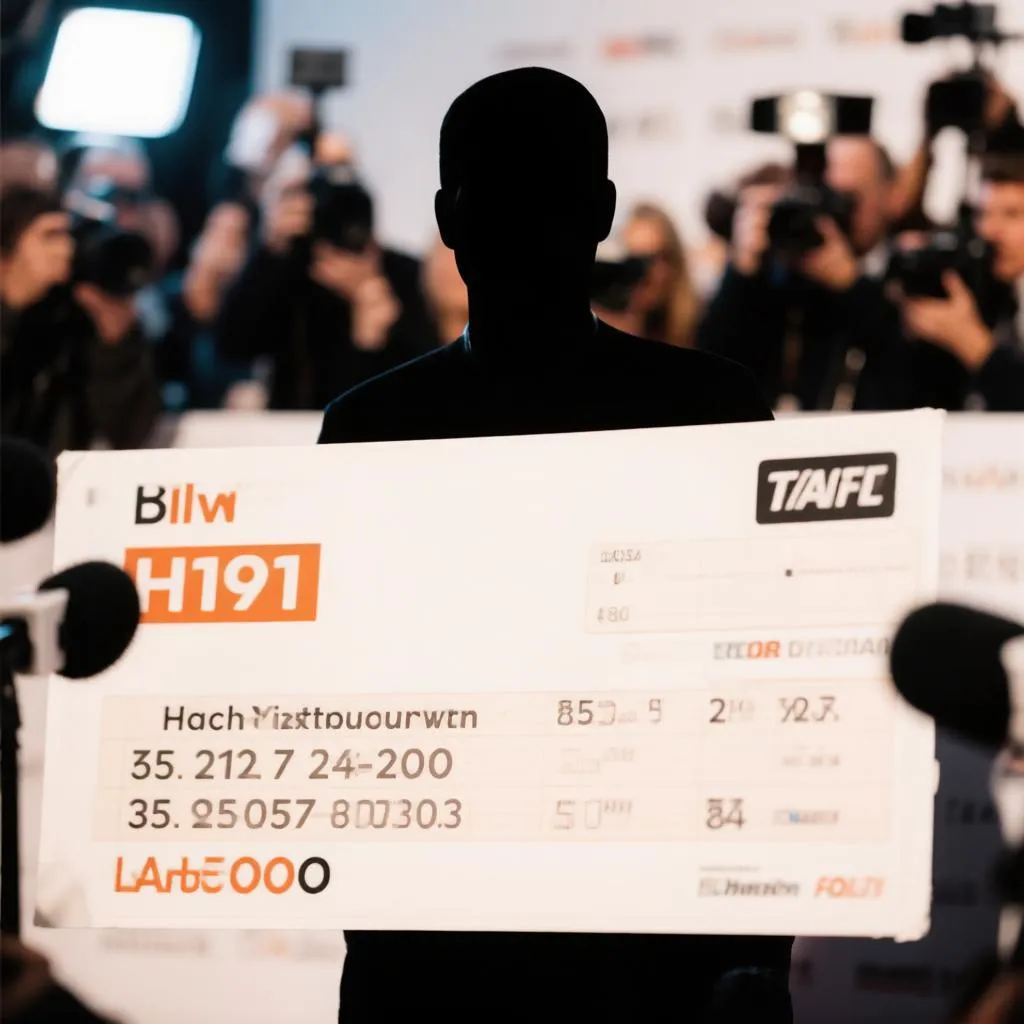
Imagine winning €90 million on a Saturday evening — and walking into work on Monday morning as if nothing happened. For most lottery players that fantasy ends with the fear of recognition, endless requests from distant relatives and journalists on the doorstep. Germany is one of the countries where this fear is largely unfounded: unlike many US states, lottery winners there are not paraded in front of cameras, and no law forces them to reveal their identity. Still, the system is not absolute, and the details of how publicity actually works — who knows your name, what the press is allowed to report and what winners themselves occasionally do wrong — are worth understanding before that big cheque ever arrives.
The short answer
Yes, German lottery winners can stay anonymous, and for the overwhelming majority that is precisely what happens. The state lottery companies operate under strict data protection rules, and the name, address and full identity of a winner are treated as confidential personal data. What the public sees is a deliberately sparse formula: a first name, the first letter of the surname and the federal state or region — something like “Birgit K. aus Bayern”. Only the lottery operator itself, and the authorities required by law, ever learn the full identity behind that abbreviation.
This practice rests on the General Data Protection Regulation and German data protection law, which classify a lottery win as personal data that may not be published without consent. Press releases from LOTTO Bayern, WestLotto or LOTTO Berlin follow this pattern so reliably that the “Hans-Peter H. aus Hamburg” style announcement has become a cultural fixture in itself — a running joke among German journalists, who read between the lines of the anonymised press releases trying to guess the winner’s profession and hometown.
How the announcement process works
The anonymised publicity is not an accident but a coordinated routine. When a major prize is claimed, the lottery company follows a defined procedure that balances transparency about the win against protection of the person behind it:
- The operator publishes the essential facts — the amount, the game, the draw date and the ticket purchase location in general terms — while reducing the winner to first name, initial and region.
- The winner is asked, never forced, whether they would like to appear publicly; a handful choose to do so, often for charitable causes or personal reasons, and their consent is documented.
- Photographs and interviews are arranged only with explicit agreement, and the winner may withdraw from the arrangement before publication.
- The operator keeps the full identity internally for payout and legal purposes, but does not pass it on to journalists, media outlets or private parties.
- Any deviation from anonymity — full name, picture, hometown — requires the winner’s signed consent.
The result is a system in which publicity is opt-in rather than opt-out. In the United States, by contrast, several states legally require the name of a jackpot winner to be disclosed as a condition of the prize, on the theory that transparency protects public trust in the games. Germany takes the opposite view: public trust is served by publishing the fact of the win, while the human being behind it remains out of reach.
What is published — and what stays hidden
The split between public and private information is worth spelling out, because media reports blur it regularly. A comparison across the major lottery games shows how consistent, and how limited, the published detail really is:
| Information item | Published publicly? | Typical form |
|---|---|---|
| Winning amount | Yes | Exact sum, e.g. €32,547,120.60 |
| Game and draw date | Yes | “Eurojackpot, draw of 7 October” |
| Winner’s first name | Usually | “Andreas” |
| Surname initial | Usually | “Andreas K.” |
| Region or federal state | Usually | “aus Nordrhein-Westfalen” |
| Full name and address | No | Confidential, operator only |
| Photograph or interview | Only with consent | Optional, winner decides |
Media reports therefore reconstruct only what the operator chooses to release, and anything beyond that — a street, an employer, a family situation — comes from other sources or from the winners themselves. Journalists occasionally manage to identify jackpot winners through local gossip or real estate purchases, but the official announcement never hands them the starting point.
The exceptions and grey areas
Anonymity in Germany is strong but not hermetically sealed, and winners should understand where the boundaries soften. None of these points are reasons for alarm, yet each one has produced real cases of exposure over the years:
- Legal proceedings — if a winner ends up in court, for instance over a dispute about the prize or a divorce, court files can contain the identity, and hearings are generally public.
- Tax authorities — although lottery winnings themselves are tax-free, the tax office may learn about them when prize money earns interest, property is bought or large transfers are investigated for anti-money-laundering purposes.
- The winner’s own behaviour — most publicity disasters in Germany are self-inflicted: winners who post about their new car, invite the whole village to a celebration or speak to local newspapers under their real name.
- Consent gone wrong — a few winners agreed to publicity interviews and later regretted the exposure; consent, once given and published, is difficult to retract.
- Third parties — a spouse, relative or business partner who knows the winner can talk, and no data protection rule applies to private conversation.
The pattern behind the list is simple: the state protects the winner, but it cannot protect a winner from their own circle. That is why financial advisers who work with lottery winners recommend treating the win as confidential within the family until decisions about money have been made.
How winners protect themselves in practice
The operators take care of the legal side, but the weeks after a large win demand a few deliberate habits from the winner personally. Lottery companies themselves offer guidance here, and experienced advisers tend to repeat the same core steps:
- Sign nothing and give no statements before talking through the payout process with the lottery company; genuine operators never pressure winners into publicity.
- Keep the physical ticket safe and unphotographed until it is registered or claimed — a bearer document in Germany is worth its full face value to whoever holds it.
- Set up a separate bank account for the prize and notify only the people who genuinely need to know.
- Consult a tax adviser and, for very large sums, a lawyer before making any visible lifestyle changes, since sudden spending is what attracts attention.
- Decide deliberately whether any publicity serves a purpose — charity, a business idea, a public statement — and if the answer is no, decline every request.
These steps cost little and prevent the most common damage, which is rarely financial and almost always social. The money itself is protected by the operator; the winner’s privacy after the payout is protected by the winner.
Why Germany chose secrecy over spectacle
The German approach has roots in both law and culture. German data protection tradition, anchored in the post-war understanding of informational self-determination, treats identity as something the individual controls. Lottery companies, run under state supervision, have internalised that principle: a win is the player’s private good fortune, and the public interest extends only to the credibility of the game.
Culture plays its part too. There is a well-known German discomfort with conspicuous wealth — the neighbour who wins millions and keeps driving the same Golf is almost a national archetype. Publicity-hungry jackpot winners, common enough on American television, remain the exception rather than the rule in Germany, and the anonymised press release reinforces exactly the social norm most winners prefer.
An interesting contrast helps to see the difference in sharp relief. In the United Kingdom, the National Lottery spent decades publishing winners’ full names by default, only switching to opt-in publicity in 2021 after years of cases in which winners begged not to be named. Germany never had to make that correction — it started where Britain ended up.
A quiet tradition worth keeping
German lottery winners occupy a rare position in the international landscape: legally protected by default, publicly visible only as a first name and an initial, and free to decide for themselves whether to step into the spotlight. The rules ask almost nothing of the winner — no press conference, no photograph, no explanation to the neighbours — and the few risks that remain come from the winner’s own circle rather than from the state or the press. For anyone filling in a Lotto slip or an online Eurojackpot ticket, that is one of the quiet comforts of the German system: if the numbers ever align, the country will learn about the win, but it will not learn about you.